
Gender discrimination in the workplace can take many forms, from sexual harassment to overt statements that women cannot or should not take roles traditionally occupied by men. Gender-neutral policies can also be used to discriminate, as Donna Bobbitt-Zeher’s analysis of two hundred nineteen sex discrimination cases shows.


Bobbitt-Zeher draws on employment sex discrimination cases filed with the Ohio Civil Rights Commission between 1988 and 2003 for which the OCRC found probable cause for sex discrimination charges. In the years since, sex discrimination claims nationwide have not declined substantially: The Equal Employment Opportunity Commission reported 24,362 sex discrimination claims in 2003 and 26,872 in 2024. But setting aside the overall numbers, Bobbitt-Zeher’s analysis uncovers important patterns—ways that sex discrimination plays out that in many cases differ from stereotype.
To be sure, the OCRC cases did include descriptions of crude sexist abuse. One sales agent reported that her employer “had signs posted stating that ‘no girls [are] allowed’ in the 1200 Club (dollar volume in a pay period). After I reached the 1200 Club, [he] told me that ‘no girls will ever reach the 1500 Club because girls are too dumb.'” Bobbitt-Zeher draws distinctions between descriptive stereotyping, in which women are assumed to have characteristics that make them unfit for certain jobs, and prescriptive stereotyping, in which women—more often women of color, in this data set—are penalized for violating ideas about how women should be.
But institutional policies were a key vehicle for discrimination—not, for the most part, because companies had discriminatory policies, but because managers had the discretion to apply nondiscriminatory policies unequally.
More to Explore
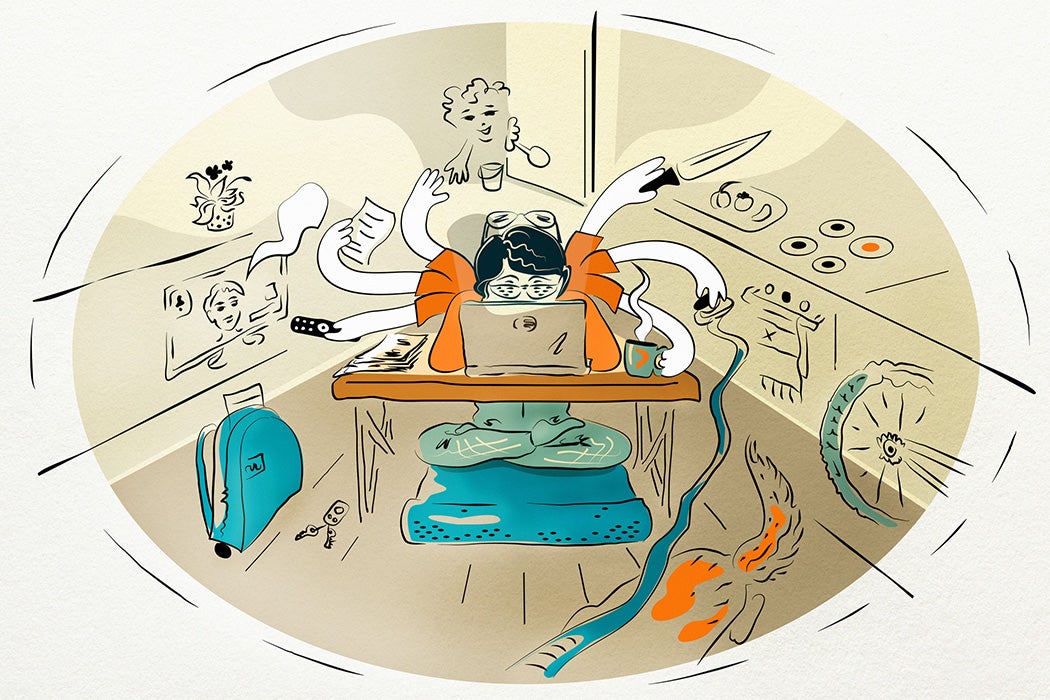
The Gendered Labor of Noticing and Anticipating
“At times, employers use discretion in applying existing policies, such as selectively using specific criteria to select a man for a job,” Bobbitt-Zeher explains. “Similarly, employers apply existing rules exclusively to women and hold women to higher standards than men. In some cases, discretion involves decisions to investigate allegations of wrongdoing and how such investigations take place.”
Weekly Newsletter
For example, an office clerk in a workplace where the vice president was known to view women as irrational and unreliable was fired for repeated tardiness as she dealt with child care issues. But while the company had a rule against missing work, its application showed the discrimination: “Nadine averaged 11.5 minutes of missed work, while men terminated for absenteeism averaged five to eight hours of missed work in the weeks before discharge.”
It is not enough, in other words, for employers to have policies that appear to treat men and women equally. If they are unequally applied, the apparent neutrality of such policies can help to cover up discrimination.


![A Chelsea Pensioner, wearing a sprig of orange blossom [?] in his buttonhole, sipping a dish of tea. Engraving by J. Jenkins after M. W. Sharp, 1840](https://daily-jstor-org.bibliotheek.ehb.be/wp-content/uploads/2026/02/consuming_the_empire_alt_1050x700-600x400.jpg)

